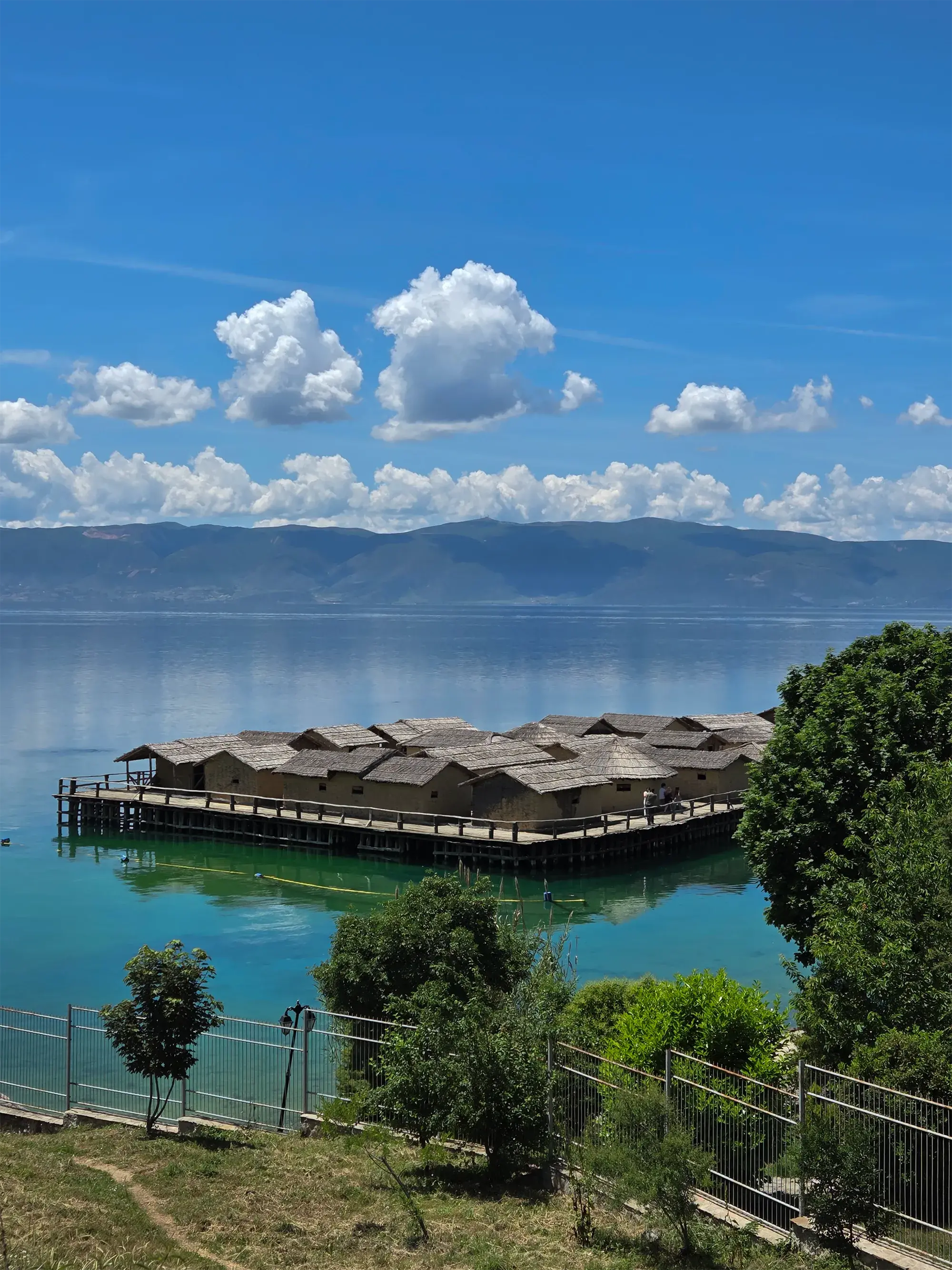
The wooden platforms emerge from Lake Ohrid's turquoise water like a ghost village. Twenty-four thatched huts cluster on stilts, their reflection shimmering in the lake 16 kilometers south of Ohrid town. This is the Bay of Bones, where you can walk through a settlement that existed 3,000 years ago.
What is the Bay of Bones?
The name comes from what archaeologists found underwater: thousands of animal bones. Between 1997 and 2005, diving teams excavated the lakebed and discovered the remains of fish, deer, wild boar, and livestock. These were the leftovers of prehistoric meals, accumulated over centuries by people who lived directly above the water.
The archaeological site is officially called "Plocha Michov Grad." No human bones turned up during the excavation. The Bryges, the tribal community who built this settlement, cremated their dead.
The original village stretched across 8,500 square meters. Archaeologists estimate it held around 60 dwellings, supported by up to 6,000 wooden piles driven into the lakebed. The nearest pile sits 12 meters from shore, likely part of a movable bridge that once connected the settlement to land.
Quick Facts
Period: 1200-700 BC (Bronze Age to Iron Age)
Discovered: 1997
Excavated: 1997-2005
Original size: 8,500 square meters
Estimated dwellings: 60 houses
Wooden piles found: Up to 6,000
Water depth: 3-5 meters
Reconstruction size: 24 houses (one-third of original)
Who lived here: The Bryges tribe
A glimpse into prehistoric life (1200-700 BC)
The Bryges were the oldest known tribal community in this region. They fished Lake Ohrid's waters, hunted in the surrounding forests, and grew crops on the shore. Living on water offered protection from wild animals and hostile tribes.
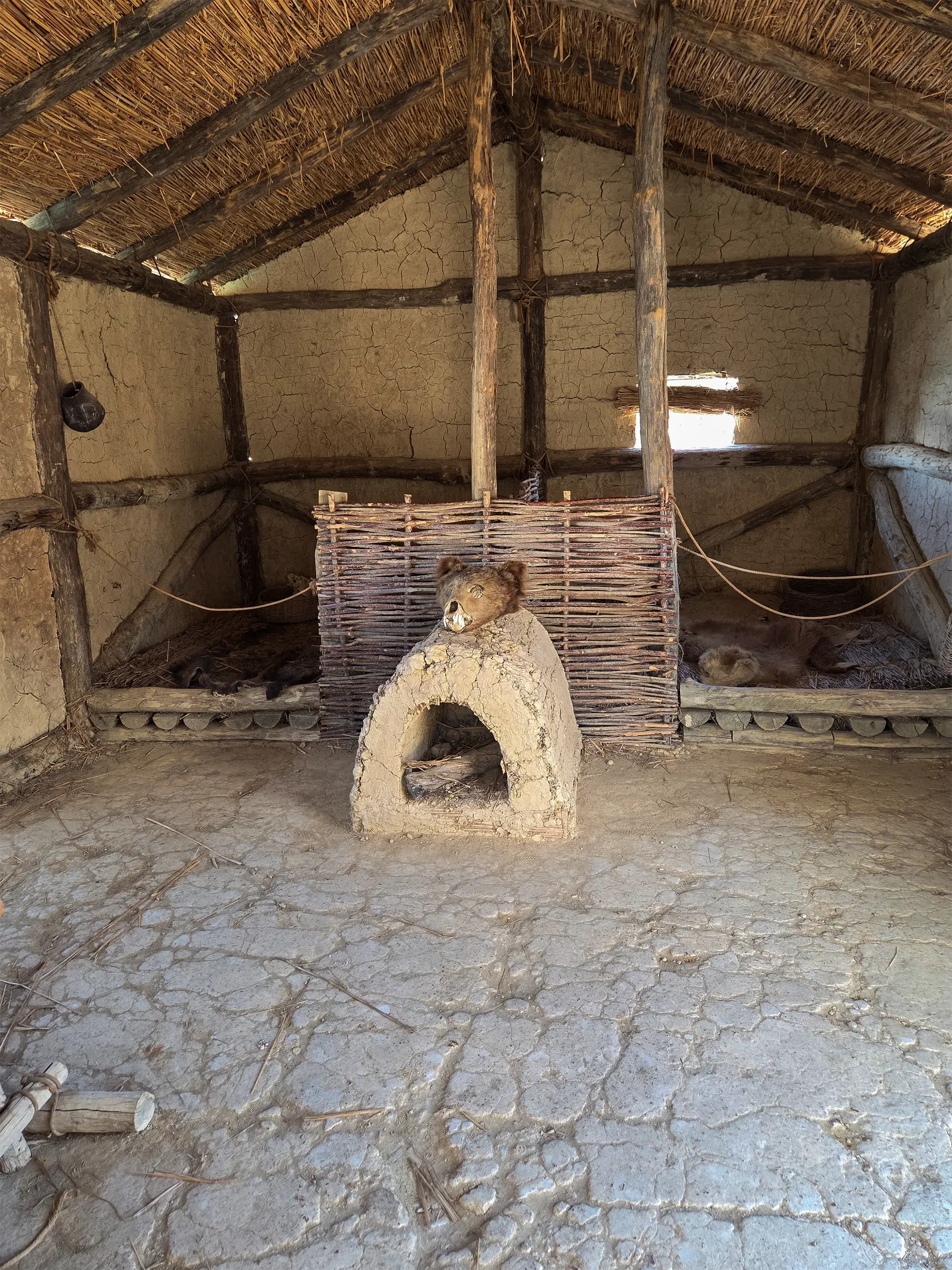
Each house stood on a platform of wooden piles. Families entered through small doorways and lived in single rooms with earthen floors covered in animal furs. They cooked over fire pits, stored grain in ceramic vessels, and mended fishing nets by the light that filtered through gaps in the thatch.
The settlement lasted roughly 500 years. Then the Bryges abandoned it. Archaeologists haven't determined why, but the wooden piles remained underwater, preserved by Lake Ohrid's unique conditions for nearly three millennia.
The Museum on Water: a modern reconstruction
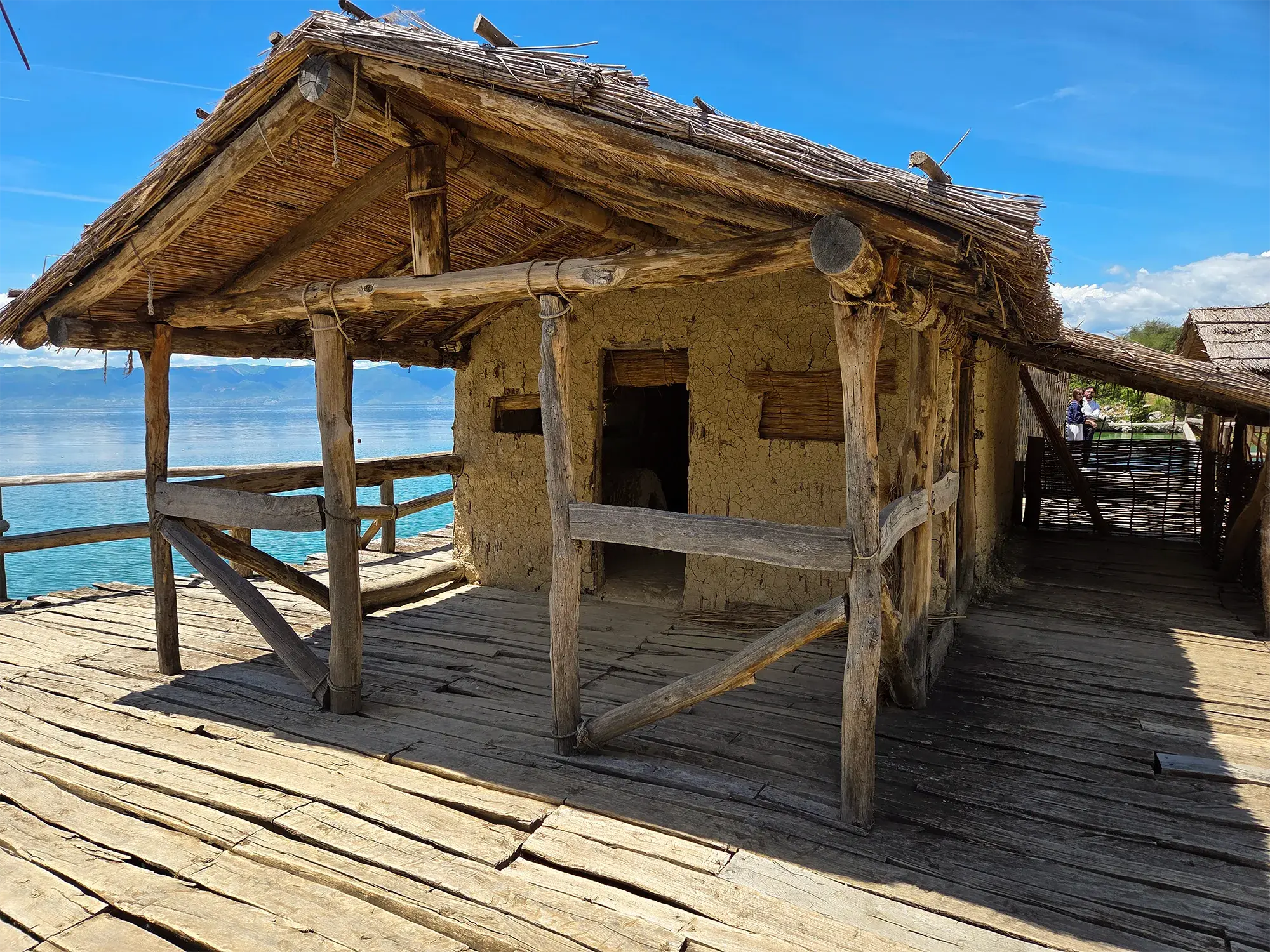
What you visit today is a reconstruction built in the early 2000s. Twenty-four replica houses stand on a platform above the actual archaeological site. Each dwelling has a thatched roof, rough wooden walls, and a simple interior that shows how archaeologists believe the Bryges lived between 1200 and 600 BC.
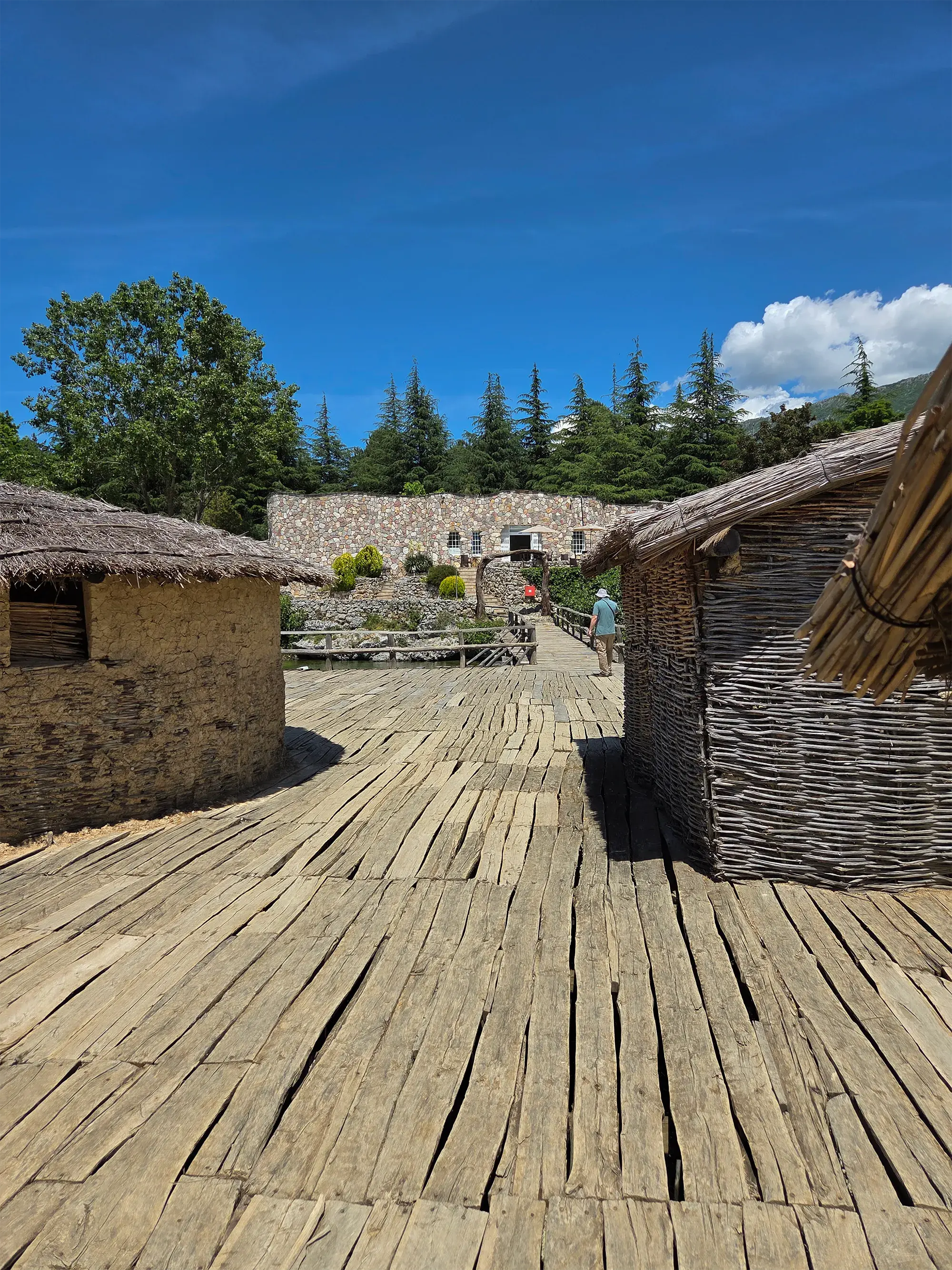
The current reconstruction represents only one-third of the original settlement. Walk the wooden boardwalk from shore, and you'll pass through a village that feels suspended between water and sky. The houses are small. You have to duck to enter most of them. Inside, fur pelts cover the floors, and replicas of pottery and tools sit in corners.
Mount Galičica rises behind you to the east. The water below is so clear you can see rocks on the lakebed. On calm days, the lake mirrors the settlement perfectly.
The visitor experience
Exploring the settlement
You start on shore at a small museum building. After buying your ticket, you walk down to the water and cross a wooden bridge that leads to the reconstructed village. The boardwalk connects the 24 houses, letting you move from dwelling to dwelling.
Some houses are empty. Others contain displays: fishing equipment, stone tools, pottery with geometric patterns, ceremonial objects. The interiors are dim, lit only by sunlight through the doorways and gaps in the walls.
The experience takes between 45 minutes and two hours, depending whether you read every display and photograph the village from multiple angles. Most visitors spend an hour here.
The on-shore museum
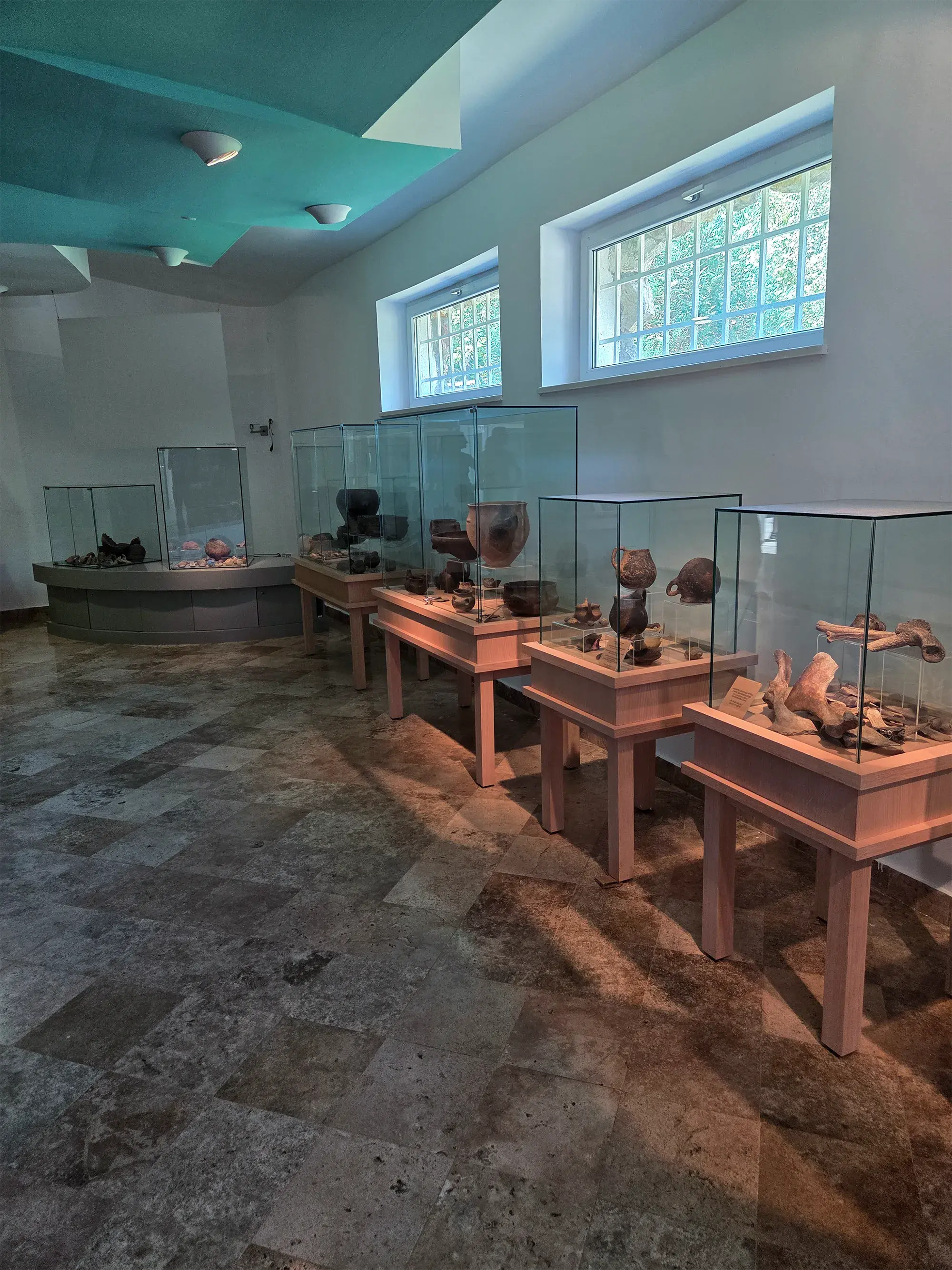
The museum building on shore holds artifacts recovered from the underwater excavation. You'll see actual pottery shards, stone implements, bone needles, and fishing weights. One wall displays a large photograph of the settlement foundations as they appear underwater today: hundreds of wooden piles jutting from the lakebed like a submerged forest.
The most unusual artifacts are circular ceramic tiles with holes drilled through them. Archaeologists believe the Bryges used these as weights for fishing nets, though other theories suggest they had ceremonial purposes.
The Roman fortress above
A 3rd century AD Roman castrum sits on the hill above the Bay of Bones. Your museum ticket includes access to this fortress, though you'll need to climb a steep path to reach it.
The fortress is mostly ruins: foundation stones, partial walls, fragments of watchtowers. But the view justifies the climb. From the top, you can see the entire Bay of Bones spread below you, the reconstructed village tiny against the massive expanse of Lake Ohrid. Mount Galičica dominates the eastern shore. On clear days, you can see all the way to the Albanian border.
Picnic tables and benches dot the fortress grounds. Many visitors bring lunch and eat while overlooking the lake.
Practical information for visitors
Bay of Bones Museum Price
Adults pay 150 Macedonian Denars (which is two and a half Euro). Students and children receive reduced rates, though the exact discount varies. The ticket covers both the pile-dwelling settlement and the Roman fortress.
Bring cash. The museum only accepts Macedonian Denars, and there's no ATM nearby. They do accept cards, but it is better to bring cash. There are plenty of souvenirs outside you can buy as well. Locals sell items that you can bring back with you home. And they only accept cash.
Bay of Bones Opening Hours
From July through August, the museum opens at 9:00 AM and closes at 7:00 PM. The rest of the year, hours are 9:00 AM to 4:00 PM. From October through April, the site closes on Mondays.
How Much Time You Need at the Bay of Bones Museum?
Plan for at least one hour to see the museum and village at a comfortable pace. If you want to hike up to the Roman fortress and explore the ruins, add another 30 to 60 minutes.
How to Get to the Bay of Bones: Your Travel Options
From Ohrid (16 kilometers)
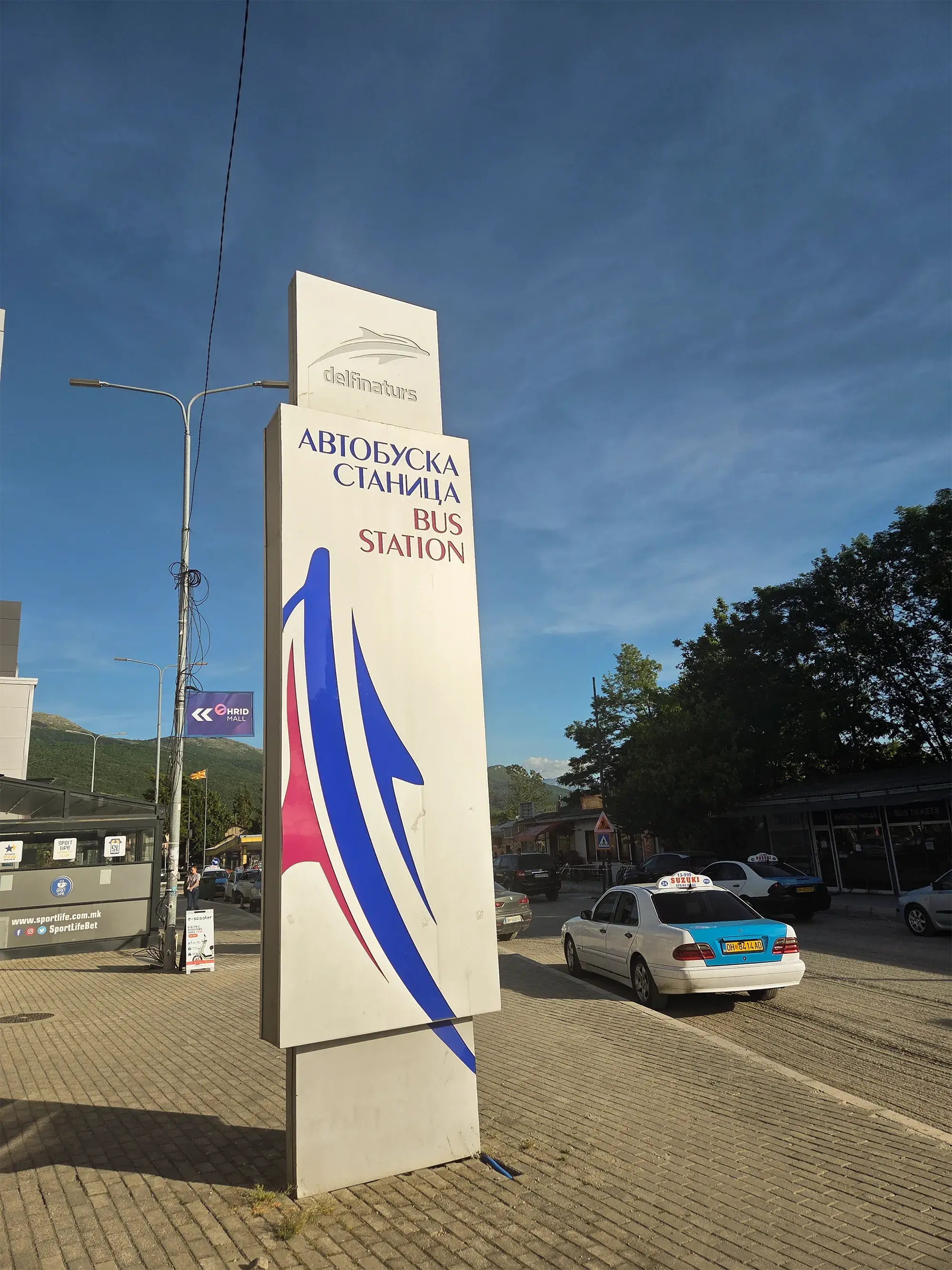
By bus: Buses heading to Sveti Naum stop at the Bay of Bones. The ride takes 20 to 30 minutes, depending on how many stops the bus makes. Tell the driver you want "Bay of Bones" or "Zaliv na Koskite," the Macedonian name.
By taxi: A taxi from Ohrid to the Bay of Bones costs around 16 euros. Most drivers will wait while you tour the site, then continue to Sveti Naum for the same fare. Negotiate before you start the trip.
By boat: During summer, tour boats run from Ohrid harbor to the Bay of Bones and Sveti Naum. This is the most scenic option, though departures depend on weather and passenger demand.
By car: Drive south from Ohrid on road P1301 (also marked as P501). The route follows the western shore of Lake Ohrid toward the Albanian border. Watch for signs pointing to "Bay of Bones" or "Museum on Water." Parking is free.
From Skopje
The Bay of Bones is 172 kilometers southwest of Skopje. The drive takes about 2.5 hours via the A2 highway to Ohrid, then south along the lake.
Beyond the basics: unique experiences at the Bay of Bones
Scuba diving the original site
Diving Center Amfora in Ohrid offers guided dives to the actual underwater excavation site. You descend to the lakebed where the original wooden piles still stand and pottery shards lie scattered in the sand.
The price for the dive includes all equipment and a dive master. The depth ranges from 3 to 5 meters, making this suitable for Open Water certified divers. Best conditions run from May through September.
You won't see intact structures. But swimming among the ancient piles, running your fingers along wood that supported houses 3,000 years ago, creates a connection that the reconstructed village can't match.
Picnicking and swimming
The museum grounds include lakeside picnic areas with views across the water to Mount Galičica. A beach sits 400 meters south of the museum. The shore is rocky rather than sandy, but the water is exceptionally clear and cold even in summer.
Combining with St. Naum: the perfect day trip
St. Naum Monastery sits 29 kilometers south of Ohrid at the lake's southern tip. The monastery, built in the 10th century, guards a complex of natural springs where peacocks roam the gardens.
The road from Ohrid to St. Naum passes directly by the Bay of Bones. Most visitors combine both sites in a single day trip.
The route
Drive south from Ohrid along the lake. After 16 kilometers, you'll reach the Bay of Bones. Continue another 13 kilometers to St. Naum. The entire lakeside road is scenic, passing through small villages like Trpejca, Lagadin, and Pestani.
Taxi option
A taxi from Ohrid typically charges 16 euros to take you to both the Bay of Bones and St. Naum, wait at each location, and return you to Ohrid. Total trip time runs 4 to 5 hours.
Boat tours
Many boat operators run trips from Ohrid harbor that stop at the Bay of Bones, continue to St. Naum, then return to Ohrid. These tours usually include 1 to 2 hours at each location. Prices vary based on the season and number of passengers.
Sample itinerary
Morning: Leave Ohrid by 9:00 AM, either by boat, taxi, or rental car.
Mid-morning: Arrive at the Bay of Bones. Spend 1.5 to 2 hours exploring the settlement, museum, and Roman fortress.
Lunch: Continue to Trpejca or Pestani. Both villages have restaurants with terraces overlooking the lake. Order fresh trout, the local specialty.
Afternoon: Drive to St. Naum Monastery. Walk the grounds, visit the church, and explore the natural springs where the Crn Drim River begins. Rent a rowboat if you want to paddle through the reeds where the springs bubble up from underground.
Evening: Return to Ohrid along the coastal road. Stop in any village that catches your eye. The light on the lake is best in late afternoon.
Photography tips
Early morning and late afternoon provide the best light. The contrast between the yellow-brown thatched roofs and the blue water becomes more dramatic as the sun drops toward the horizon.
Cloudy days create atmospheric images. Mist sometimes rises from the lake, partially obscuring the settlement and giving photographs a mysterious quality.
The view from the Roman fortress captures the entire layout of the reconstructed village against the sweep of Lake Ohrid. Bring a telephoto lens if you want detailed shots of individual houses from above.
A window to another world
Standing on the wooden boardwalk with water on all sides, you're occupying the same space where Bryges families lived their entire lives. They were born in these houses, learned to fish from these platforms, repaired nets where you're standing, cooked meals, raised children, grew old, and died without ever traveling more than a few kilometers from this spot.
The reconstructed village makes that past tangible in a way that ruins and artifacts in glass cases cannot. You can walk through their homes, see the scale of their world, understand how close they lived to the water and sky.
Lake Ohrid has changed remarkably little since the Bronze Age. The same mountains rise to the east. The same wind ripples the surface. The same species of trout swim in the depths. The Bryges would recognize this view.
For 2.40 euros and an hour of your time, you can step into their world and see Lake Ohrid as they saw it 3,000 years ago.