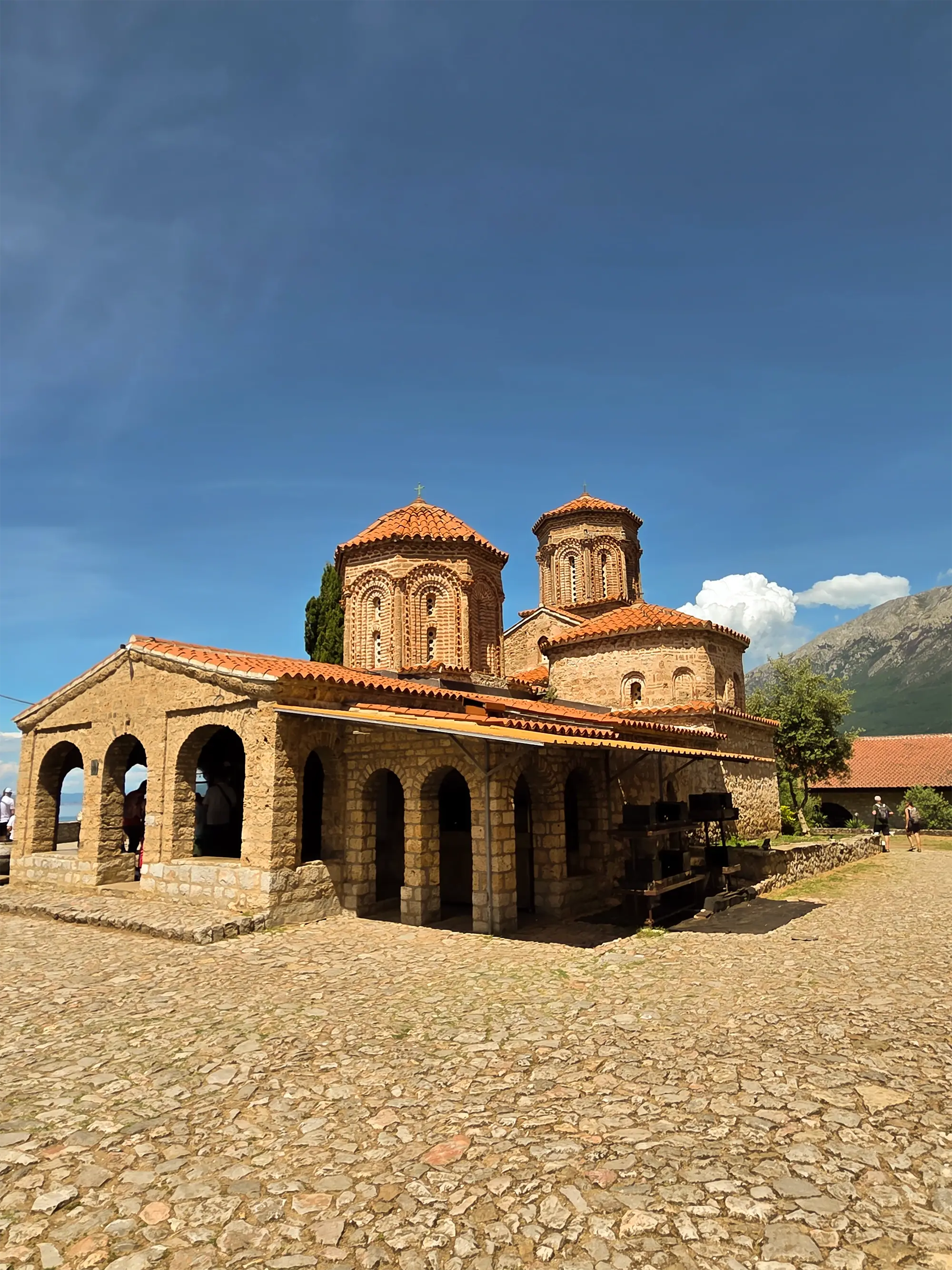
What started as a 10-th century monastery complex is now one of the most visited sites in North Macedonia. Monks still live at St. Naum, while peacocks wander the grounds, and the springs feeding Crn Drim river serve as refreshment no matter the time of the year.
An active monastery with genuine history, St. Naum is a must-see for anyone visiting Ohrid.
The boat from Ohrid harbor takes about 45 to 60 minutes to reach Sveti Naum, depending on stops. It leaves from the dock near the old town, and the ride lets you enjoy Ohrid Lake from a different perspective.
Sveti Naum is 29 kilometers south of Ohrid, close enough to the border that Pogradec is visible across the lake on a clear day.
Here's what to know before you go.
Getting to St. Naum
By boat (the right way)
The first and easiest choice is to take the ferry from Ohrid’s main pier. The ferry from Ohrid's main pier is the obvious choice, and it earns that status. The ride takes 60 minutes each way.
Large boats depart early in the morning, and return from St. Naum in the mid to late afternoon. Round trip costs between 15 and 20 euro.
Some of the boats also stop at the Bay of Bones, so ask beforehand. The Bay is an archaeological site with a reconstructed pile-dwelling settlement above the water. You will spend an hour there probably, but it is worth the time.
During peak season in July and August, decks fill quickly and the monastery grounds get crowded. September, May, and June, offer calmer environment and more time to explore.
By car
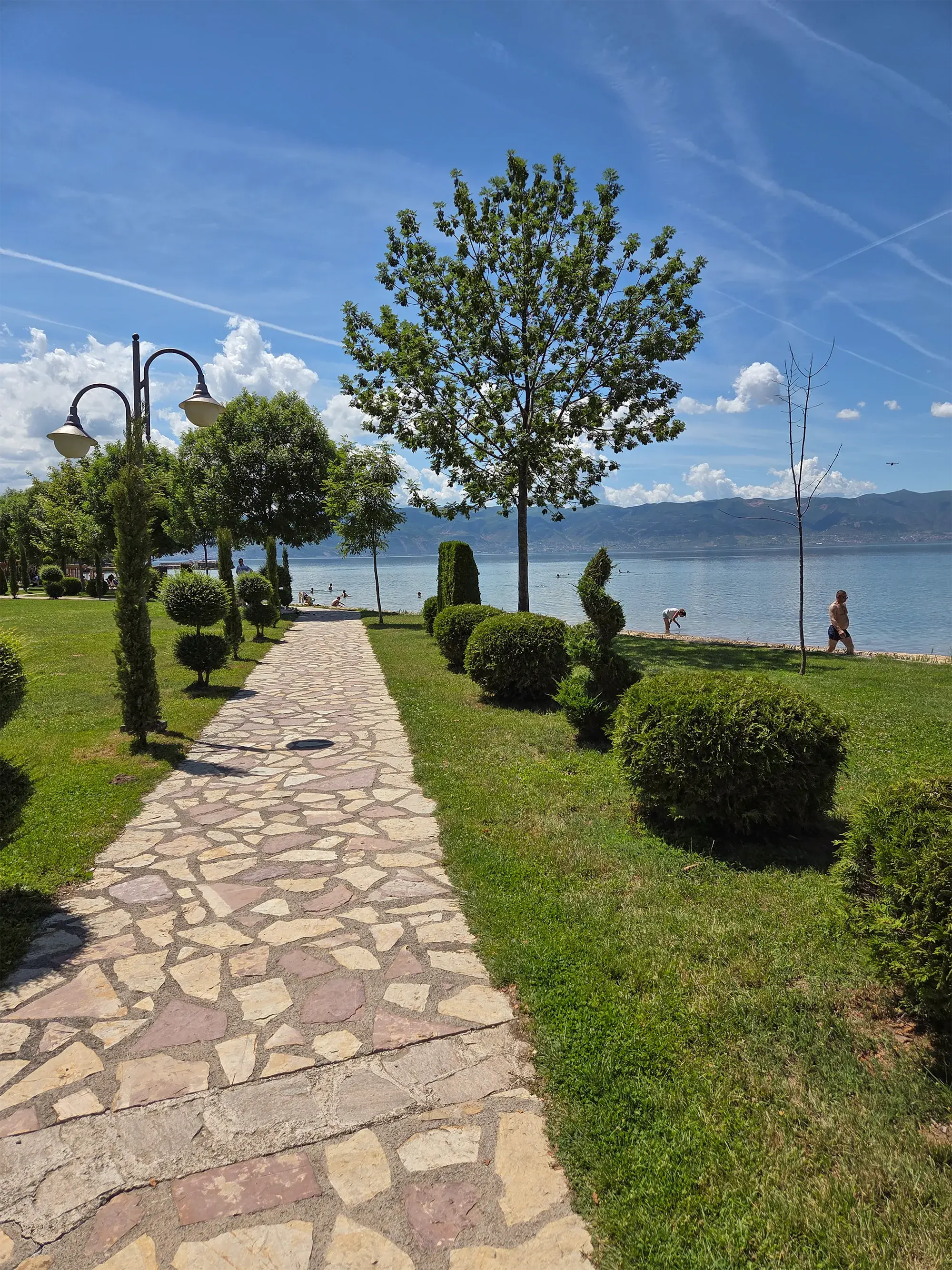
Follow the E65 south from Ohrid along the eastern shore. The drive passes through villages like Peshtani, Trpejca, and you drive close to the lake for most of the time. Parking fee is 100mkd (2e). Driving gives you flexibility to stop at nearby villages and spend the whole day exploring. Trpejca is known as St. Tropez of Ohrid due to its crystal-clear water beaches, while Peshtani has some amazing food you can try.
By bus or shared taxi
Minibuses run from Ohrid to St. Naum several times a day. Bus schedules change seasonally; check at the bus station the day before. You can also try shared taxis that depart from the bus stop near the city center.
If you like the freedom of a car, but you do not want to rent for your entire holiday, you can negotiate a full-day hire with taxi providers.
The Monastery
Founded in 905 by St. Naum of Ohrid, a disciple of Saints Cyril and Methodius, the monastery sits on a rocky bluff directly above the lake. The setting, looks dramatic no matter if you look from a historical aspect in the 9th century, or in the modern environment you see today.
St. Naum was a contemporary of St. Kliment, whose monastery stands in the center of Ohrid town. Together they were responsible for the spread of Slavic literacy and Christian education in the region. The Church of the Holy Archangels Michael and Gabriel inside the monastery is small, dimly lit, and covered floor-to-ceiling in Byzantine frescoes. Some have faded considerably. Walk slowly and enjoy every piece of it.
Inside the church, the tomb of St. Naum sits in a small chapel. According to local tradition, if you press your ear against the stone, you can hear his heartbeat. Plenty of visitors try this. Whether they hear anything depends, it seems, on how quiet the room is and how much they want to.
Entry to the monastery grounds is free. A small fee of around €1 is charged to enter the church itself. Bring cash. Dress modestly; this is an active place of worship, not a museum.
The Wooden Statue You Shouldn't Walk Past
Before you reach the main entrance gate, there's a wooden sculpture that stops most visitors just before you climb uphill toward the monastery. The statue, made by sculptor Boris Dzeparoski, sits larger than life. He made it using only his chainsaw, and the whole thing took him 15 hours.
The statue was consecrated on January 19, 2006, by the Archimandrite Nektarij. It is, bluntly, extraordinary for a chainsaw carving.
The Peacocks
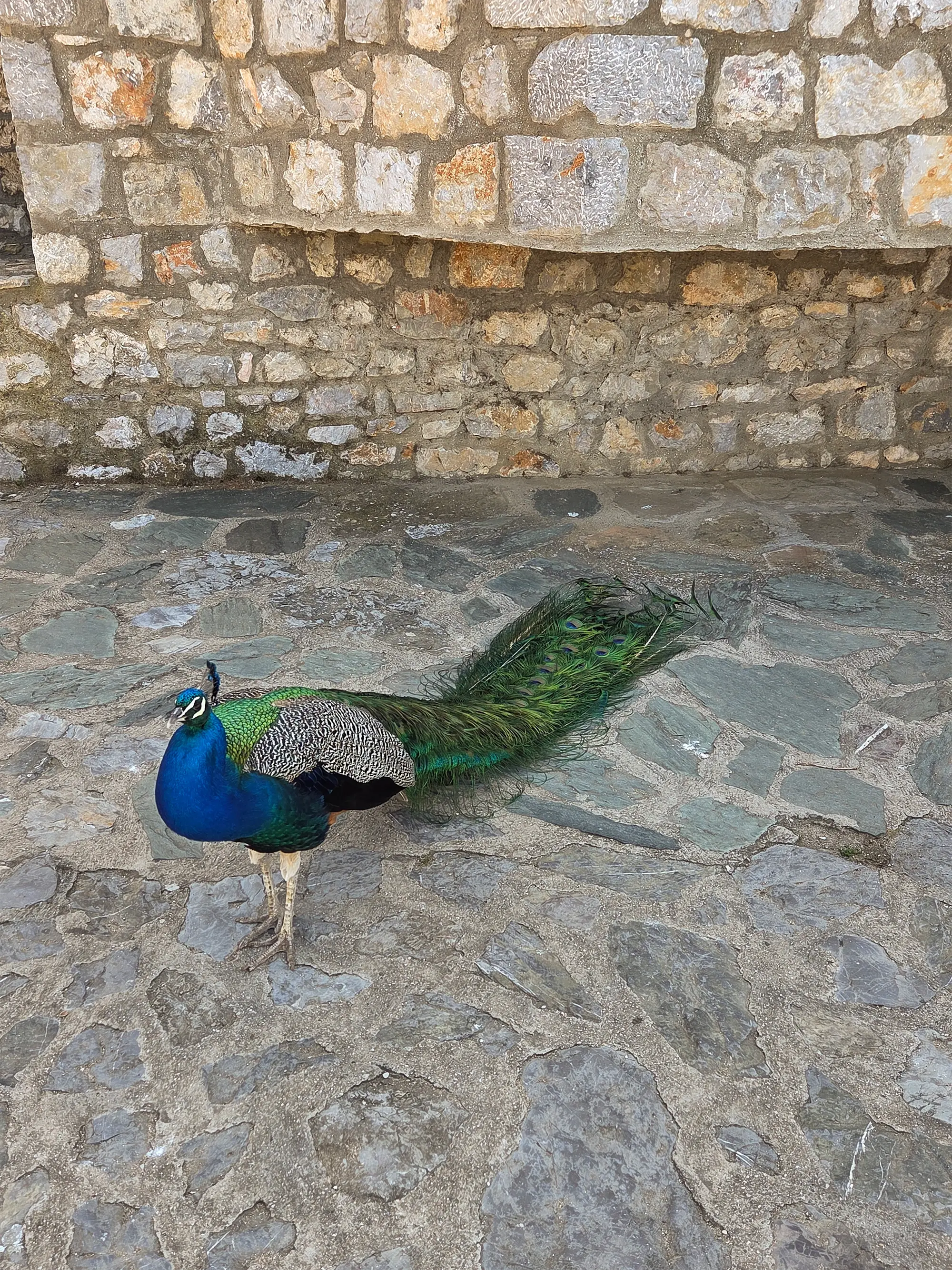
They're free-roaming, which is obvious the moment you enter the grounds. A fully fanned peacock tail is impressive up close. Several meters closer than you expected. The birds are not aggressive by nature but they are territorial, unbothered by tourists, and have no will to pose for your pictures.
Do not try to feed them, or let children chase them. Do not try to corner them, or they will retaliate and can bite you.
As locals often say, “They have been here longer than the hotel."
The Springs Boat Tour
This is the other reason people make the trip.
Behind the monastery complex, the Crni Drim River begins. Or rather, it doesn't so much begin as it emerges, quietly and constantly, from dozens of underwater and coastal springs bubbling up through the lakebed. The little lake formed here measures 700 meters long, 250 meters wide, and just 3.5 meters deep. There are 15 coastal springs and 30 more underwater. Total flow: 6.5 to 10 cubic meters per second, year-round.
You see all of this from a small wooden rowboat, with a guide, for €5 per person. The tour lasts around 30 minutes.
The water here is almost Mediterranean-clear. You can see see individual pebbles five meters down. The temperature stays between 10 and 12 degrees regardless of the season, which means in summer the springs send a visible mist across the surface in the early morning. The water just looks cold in a way that makes you trust it.
The endemic algae species in the springs, including Calonies alpestris and Sellaphora seminulum, are listed on the official Galicica National Park signage nearby.
Fishing in the little lake is strictly forbidden. You can read the national park rules in several languages, at the entrance to the boat area. The boats themselves must be authorized by Galicica NP.
Boat tickets are sold near the waterfront. In high summer, there can be a short wait. Go in the morning if you can.
Practical Notes
The monastery complex sits within Galicica National Park, which was proclaimed in 1958 and covers 24,145 hectares between Lake Ohrid and Lake Prespa.
There are plenty of restaurants at the site, with terraces above the lake serving grilled fish and traditional Macedonian food. We have to note, restaurants at St. Naum are slightly more expensive than those in Ohrid.
But the experience is different, and you pay for it. At the entrance, you can also find plenty of souvenir shops.
Besides St. Naum’s monastery, make a quick stop to visit the healing spring of St. Petka. The small church sits on the left before you start climbing for the monastery. The water is drinkable.
Bring swimwear in summer. The beach near the monastery is one of the few on the lake with genuinely sandy shore, and the afternoon free time on any organized boat tour is long enough to use it.
Start in the morning if you're driving. The light on the water is better, the crowds are thinner, and the boat for the springs starts early.