Before packing for Ohrid, it’s worth knowing that this UNESCO-listed town doesn’t follow typical Mediterranean weather patterns. Ohrid’s weather can surprise even seasoned travelers. Sitting nearly 700 meters above sea level beside one of Europe’s oldest lakes, this charming town crafts its own weather: cool breezes in summer, mild winters, and unpredictable temperature swings throughout the year. Mornings by the water can feel cool even in midsummer, while afternoons turn warm and golden. Knowing how to dress for these shifts is key to enjoying Ohrid comfortably year-round.
Spring in Ohrid (March-May)
Spring in Ohrid often brings unpredictable rain, even on clear days. At the Church of St. John at Kaneo, it’s not uncommon to see travelers caught off guard as stone paths turn slippery within minutes. Light footwear like sandals may seem comfortable, but they offer little traction when the weather shifts, a useful lesson for anyone visiting during spring. Proper shoes with grip are essential for anyone hoping to explore comfortably and safely.
March temperatures sit between 3°C and 13°C. By May, you'll see 11°C to 22°C, but those numbers do not tell the full story. The wind off the lake cuts through thin jackets. You should like you are visiting two different places: one warm, one cold, and both happening the same day.
Bring a waterproof jacket that you can tie around your waist when the sun comes out. Spring storms roll across the water fast. You'll be eating grilled trout outside one moment, and then everyone's running under awnings the next. The Old Town's cobblestones date back centuries, and they get slippery the moment water touches them.
Pack real walking shoes with tread. Not fashion sneakers. Not cute flats. The path up to Samuel's Fortress has uneven steps that tilt at angles, and the climb to Sveti Jovan Kaneo church follows stones worn smooth by a thousand years of pilgrims and tourists. One woman I saw wore heels to get the iconic photo. She made it, but barely, and her friend had to hold her steady.
Dress in layers. For example, wear a t-shirt, but bring a long-sleeve shirt in your bag, and then a fleece around your waist. By 2 PM you might be wearing only the t-shirt. But by 7 PM you might have everything on. The locals can read the weather by looking at the lake. Tourists can't.
The water in March stays around 10°C. Some people have no problems swimming in March and April. And while there might be a person or two in the lake, everyone else watches from shore in jackets. By late May, the lake warms to 18°C and a few locals start swimming, but you'll want to wait until June unless cold water excites you.
Summer in Ohrid (June-August)
Summer in Ohrid brings steady warmth, with daytime highs averaging 27°C to 31°C. The lake’s surface amplifies sunlight, and the mountain elevation adds to its intensity. The cool breeze can be deceptive, it offers relief but little protection from the strong UV rays intensified by both altitude and water reflection. Sun protection and lightweight, breathable clothing are essential during this time of year.
Pack light fabrics. Cotton and linen dry faster than synthetics when you sweat walking uphill to the fortress or sitting on hot stone seats at Plaošnik. Here is a tip from locals: bring three t-shirts and rotate them daily. Two pairs of shorts. One sundress for evenings. Two swimsuits because nothing dries overnight in the lake air, even in summer.
The lake reaches 23°C to 25°C in July and August. Perfect temperature. You can swim every morning before the day heats up, starting around 7 AM when the water is glass-smooth and the mountains across turn gold. By 11 AM, the beaches are filled with families and the water churns with kids jumping off docks.
Add something nice for dinner. Do not make the mistake of showing up to Kaneo Restaurant in hiking shorts and a sweaty t-shirt. After 7 PM, Ohrid dresses up. The evening walk in Old Town turns into a fashion show. Locals stroll in their best clothes, meeting friends, eating ice cream, judging tourists.
Bring sandals that can handle walking. The beaches are rocks and pebbles, not sand. All these smooth stones shift under your feet. Locals swim with water shoes you can get at almost any shop. Otherwise, you will be tiptoeing across hot rocks to reach swimming depth.
A hat matters more than you think. The fortress has no shade. The boardwalk has no shade. The boat ride to Sveti Naum has no shade. Many tourists turn lobster-red on a two-hour boat trip because they think that the breeze would be enough. Bring a hat with a real brim, and sunglasses that won't fall off when you lean over boat railings to watch the clear water.
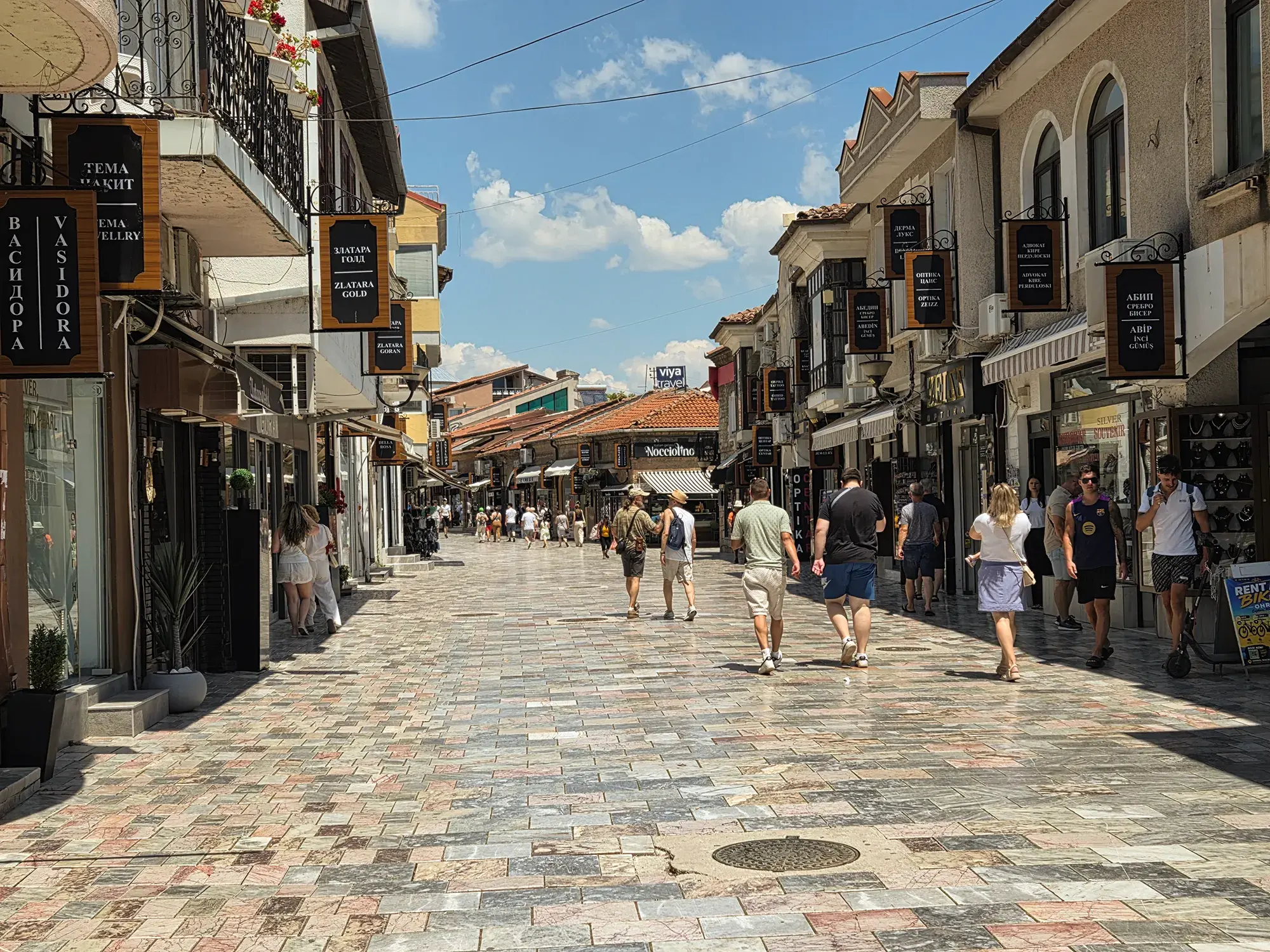
Autumn in Ohrid (September-November)
September feels like summer refused to leave. Temperatures run 16°C to 25°C, the lake holds its warmth at 20°C to 22°C, and the crowds thin out. You can still swim in late September while watching yellow leaves fall from trees along the shore.
By October, the shift happens. Mornings drop to 10°C and the wind picks up. The change often happens instantly, over a day or two. For example, you might wear a T-shirt on Monday, and then by Wednesday you need a coat. The lake changes as well, from blue and calm to choppy and grey.
Pack layers you can add and remove. Shirts with a cardigan are your go-to outfit through mid-October. After that, you need a real jacket. The wind comes off the water and finds every gap in your clothes. A scarf helps more than you'd expect.
November brings rain. Steady rain. The kind that lasts all morning and makes you duck into churches and museums. Bring a compact umbrella and waterproof shoes. The stones get slick and water pools in the low spots along the boardwalk.
The city feels almost empty after October. You can walk through the Old Town and hear your footsteps echo. The same narrow streets that were shoulder-to-shoulder in August will have very few tourists in November. The good news is restaurants still serve excellent food. The bad news is half of them are closed for the season.
Late autumn light does something special to Ohrid. The mountains turn purple at sunset. The lake reflects clouds in a way summer's bright blue never does. I took my best photographs in November, but I also wore thermal underwear under my jeans.
Winter in Ohrid (December-February)
Winter in Ohrid runs -2°C to 8°C. Snow falls intermittently. Some years dump half a meter. Some years barely dust the ground. January sees the most snow. The lake stays liquid but turns grey and angry, with waves that crash against the boardwalk and send spray over the railings.
Bring a real winter coat. Windproof and waterproof. The kind you'd wear skiing. Tourists sometimes shiver in fall jackets outside, with their arms wrapped around themselves. The locals wear puffy coats and fur-lined boots and still walk quickly to get indoors.
Pack thermal underwear. Thick wool socks. Gloves that actually keep your fingers warm. A hat that covers your ears completely. A scarf you can wrap twice around your neck. This sounds like overkill until you spend an hour climbing to the fortress in February wind.
Waterproof winter boots with deep tread are mandatory. The cobblestones get icy. The path to Kaneo church becomes genuinely dangerous. Churches and museums run cold. Keep your coat on. The guidebooks don't mention this, but locals know. They visit churches quickly in winter.
Restaurants and hotels compensate by overheating. You'll roast indoors and freeze outdoors. Layer under your coat so you can strip down to a sweater inside without carrying your coat everywhere.
What to bring every season
Comfortable walking shoes matter more than anything else you pack. The Old Town bans cars, the best views require climbing hills, and the boardwalk stretches for kilometers. Bring shoes you've already broken in. Bringing new shoes guarantees blisters.
Pack a small daypack. The weather changes fast, and you'll need to carry water, sunscreen, layers, and whatever you buy at the market. Bring something that can fit a water bottle, a jacket, sunscreen, camera, and room for a bag of fresh cherries from the Saturday market.
Bring a reusable water bottle. The tap water in Ohrid is safe and tastes clean. The locals drink it. Restaurants will fill your bottle if you ask. The fountains throughout the Old Town flow with cold water piped from mountain springs.
Add a power adapter for European outlets, Type C and F. Most hotels have one or two to lend, but bring your own. You'll want to charge your phone and camera every night after walking 20,000 steps up and down medieval streets.
If you forget something, the Centar shopping area has everything. The pharmacies stock sunscreen, toiletries, and blister treatments for tourists who wore the wrong shoes.