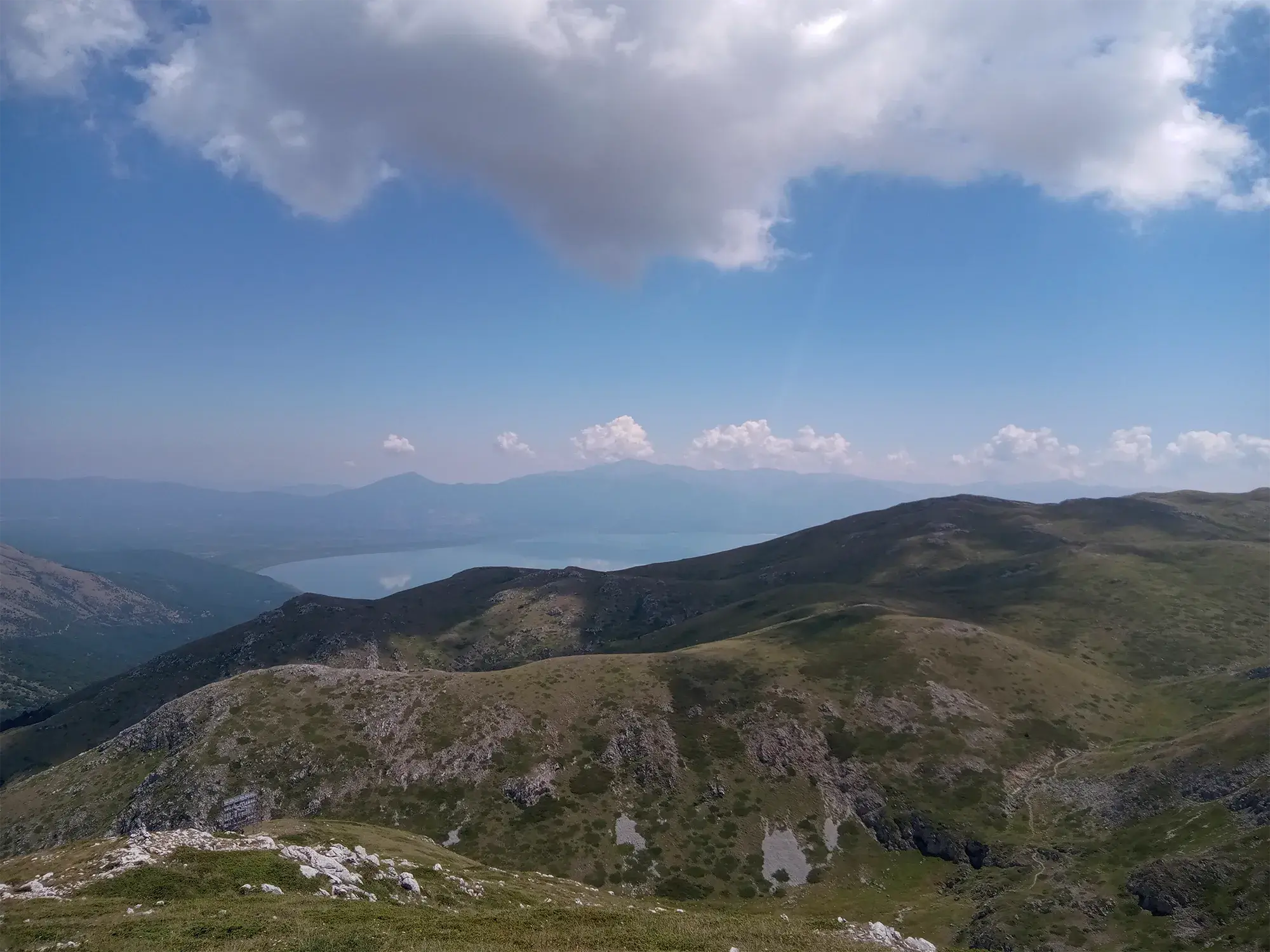
In 1905, in a quiet mountain town of Ottoman Macedonia, Ahmed Niyazi Bey unfolded a postcard that had traveled across continents. On it was the Palace of Versailles, its manicured gardens, perfect symmetry, and the grandeur of French neoclassical design captured in miniature. He looked up from the card toward Resen, where the Prespa basin stretched toward the lake and mountains framed the horizon. In that moment, he decided to build his own palace right here.
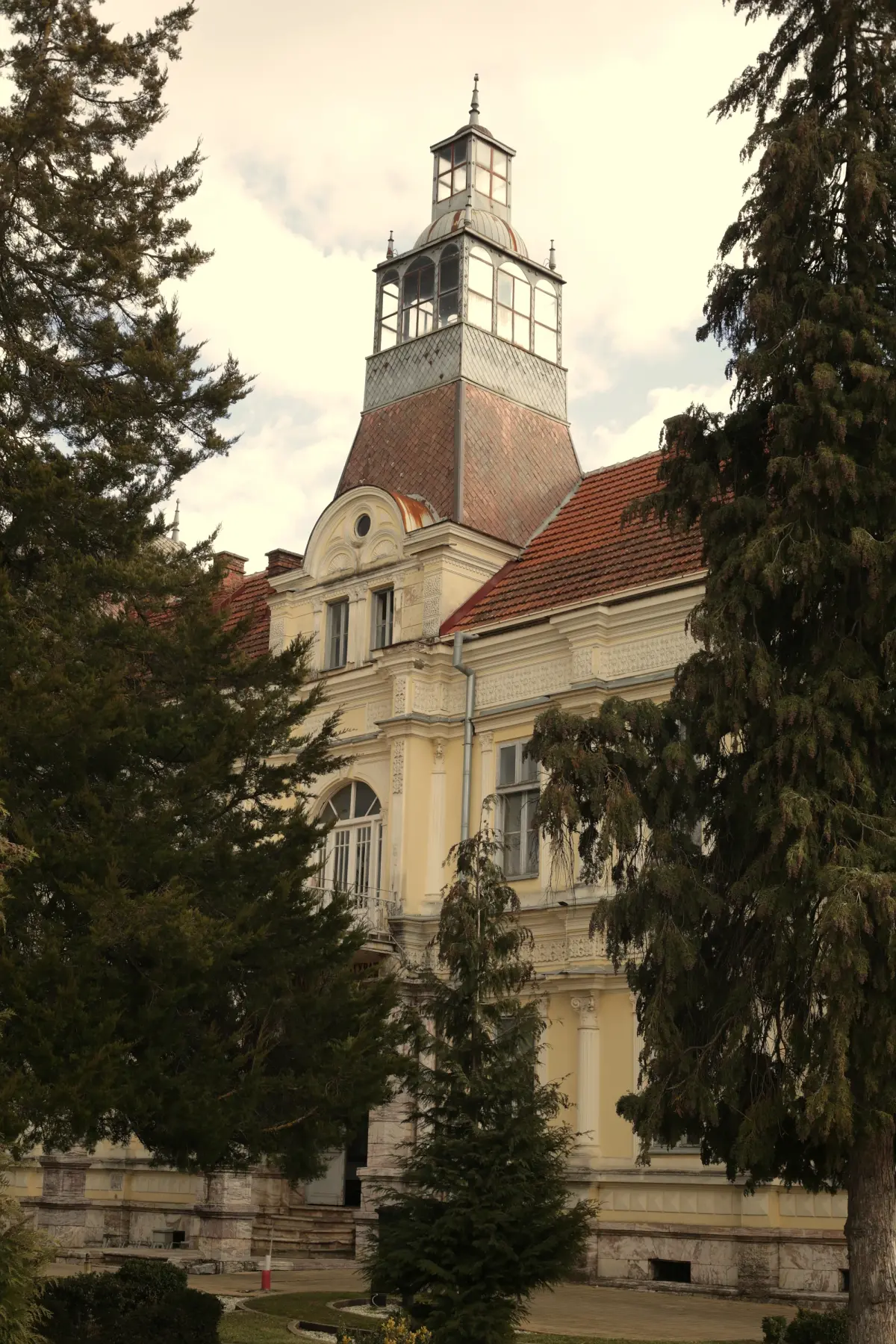
The audacity of that vision still defines the Saraj today. A 35-meter tower rises from the heart of town, its neoclassical façade adorned with sculptures and cornices that seem borrowed from Paris or Vienna, yet they stand proudly at 880 meters above sea level in one of North Macedonia’s smallest municipalities. Construction began that same year, but Niyazi Bey never saw his dream completed, he died in 1912, and the interior wasn’t finished until 1922, seventeen years after the first stone was laid.
To stand before the Saraj is to stand before a revolutionary’s dream that outlasted empires.
The man behind the palace: Ahmed Niyazi Bey
Ahmed Niyazi Bey was born in 1873 to an Albanian landowning family in Resen. His military education exposed him to the reform movements sweeping through the crumbling Ottoman Empire. By 1908, he'd become one of the key figures in the Young Turk Revolution, the uprising that forced Sultan Abdul Hamid II to restore the constitution.
Photographs from that period show Niyazi in military uniform, a rifle across his lap, a tame deer at his side, dust covering his mustache. His hat bore an inscription: "freedom or death." The image turned into postcards sold throughout the empire. People called him the "hero of freedom." His face became synonymous with the revolution itself.
But Niyazi didn't just fight. He wanted to build. His plans for Resen included public buildings, schools, infrastructure that would pull the town into modernity. The Saraj sat at the center of that vision: a palace that would announce to anyone passing through that this small town mattered, that progress had arrived in the Prespa basin.
He never saw it finished. Niyazi died in Durres, Albania, in 1912 during the First Balkan War. The exterior of the Saraj was complete by 1909, but the interior remained unfinished when he died. Workers and craftsmen continued the project through wars and regime changes until 1922.
The building you walk through today is both his accomplishment and his ghost.
The palace that took 17 years
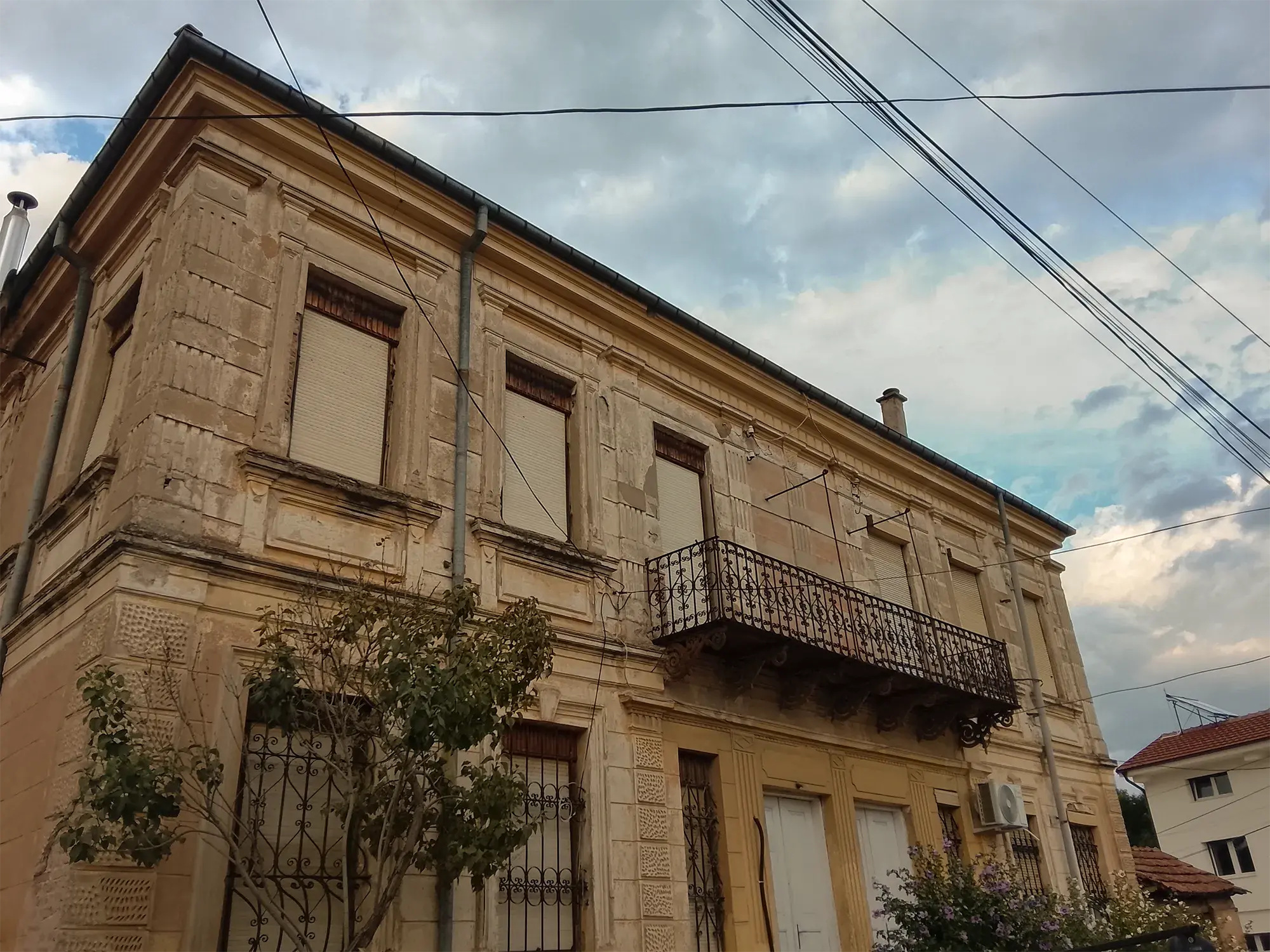
The Saraj sprawls across 7,800 square meters. The central tower climbs 35 meters, visible from most points in Resen. Symmetrical wings extend from both sides. The walls measure up to 105 centimeters thick. This isn't decorative architecture. This is fortress construction dressed in neoclassical detail.
Look at the facade. The sculptural work covering the exterior shows the level of craftsmanship Niyazi demanded. Cornices, pediments, decorative moldings - every element follows neoclassical principles. The symmetry is precise. The proportions are deliberate. Nothing about this building suggests improvisation or compromise.
Construction began in 1905. The exterior was completed by 1909, just as Niyazi's political star was rising after the Young Turk Revolution. Then the Balkan Wars erupted in 1912. World War I followed. The Ottoman Empire collapsed. The Kingdom of Serbia took control of the region. Through all of this, work on the Saraj's interior continued sporadically until 1922.
What makes the building unique in North Macedonia is its pure commitment to neoclassical architecture. Most historic buildings in the country blend Ottoman, Byzantine, and Balkan vernacular styles. The Saraj looks like it was airlifted from a European capital. That was the point. Niyazi wanted to show that Resen could produce something that matched anything in Belgrade, Vienna, or Istanbul.
A building that survived empires
The Saraj changed hands with every shift in power. The Kingdom of Serbia used it as an administrative building. The Kingdom of Yugoslavia maintained government offices inside. When World War II brought occupation forces, they made it their headquarters. After the war, Socialist Yugoslavia converted it into city hall.
Each regime left its mark. Each regime also recognized the building's value. Nobody tore it down. Nobody converted it into barracks or a warehouse. The structure demanded respect even from governments that had no connection to Ahmed Niyazi Bey or his revolutionary ideals.
The roof required major restoration in 1982. Another renovation followed in 2005. These weren't cosmetic updates. The building needed structural work to survive. The fact that authorities invested in preservation rather than demolition says something about how the Saraj had become part of Resen's identity regardless of politics.
Today, the building functions as a cultural center. The revolutionary's palace became the town's gathering place.
What Makes the Saraj in Resen So Special?
Stand in front of the Saraj and look at the marble details on the facade. That marble came from the Plocine quarry near the village of Bolno. Someone had to organize workers to cut those stones, load them onto carts, and haul them through mountain paths to Resen. Think about that decision. Ahmed Niyazi Bey could have used local stone. He could have simplified the design. Instead, he sent crews into the mountains for the right marble because the building demanded it.
Walk around the exterior and you'll see how the symmetry controls everything. A central section with two wings extending east and west. The balance is exact. Inside, the structure stacks four levels: basement, ground floor, first floor, and attic. The walls holding all of this up measure 40 to 85 centimeters thick. That's not decoration. That's fortress-grade construction using fired brick and lime mortar. These walls were built to outlast governments.
Look up at the floors between levels. Steel profiles support brick infill in the corridors and entrance halls where foot traffic concentrates. The rest of the building uses wooden beams, a practical choice that kept costs manageable without sacrificing strength. The roof and the original domes started as wood framing. By 1982, weather and time had taken their toll, so the restoration replaced the dome structures with steel profiles. The building adapted to survive.
Now focus on the northern facade, the main entrance. This is where Niyazi's vision becomes undeniable. Horizontal moldings and friezes wrap around the building, dividing each level with deliberate rhythm. Vertical pilasters rise from ground to roofline, each one capped with a carved capital. Every surface facing the street carries decoration. This wasn't budget architecture. This was a statement.
The Saraj holds its own against any early 20th-century neoclassical building in Europe. You'll hear people in Resen call it the most beautiful building in Macedonia. Maybe it is, maybe it isn't, but stand in front of it and you understand why they believe it. This isn't a provincial structure pretending to be important. This is a building that was designed to compete with anything rising in Belgrade, Vienna, or Istanbul at the time.
Niyazi built it that way on purpose. He wanted visitors to arrive in Resen, see this palace, and recalibrate their assumptions about what a small mountain town could produce.
What you'll find inside the Saraj in Resen?
Walk through the Saraj's entrance and you enter the Dragi Tozija House of Culture, a branch of the Museum of Macedonia. The interior spaces showcase rotating exhibitions, cultural events, and permanent collections related to Prespa's history.
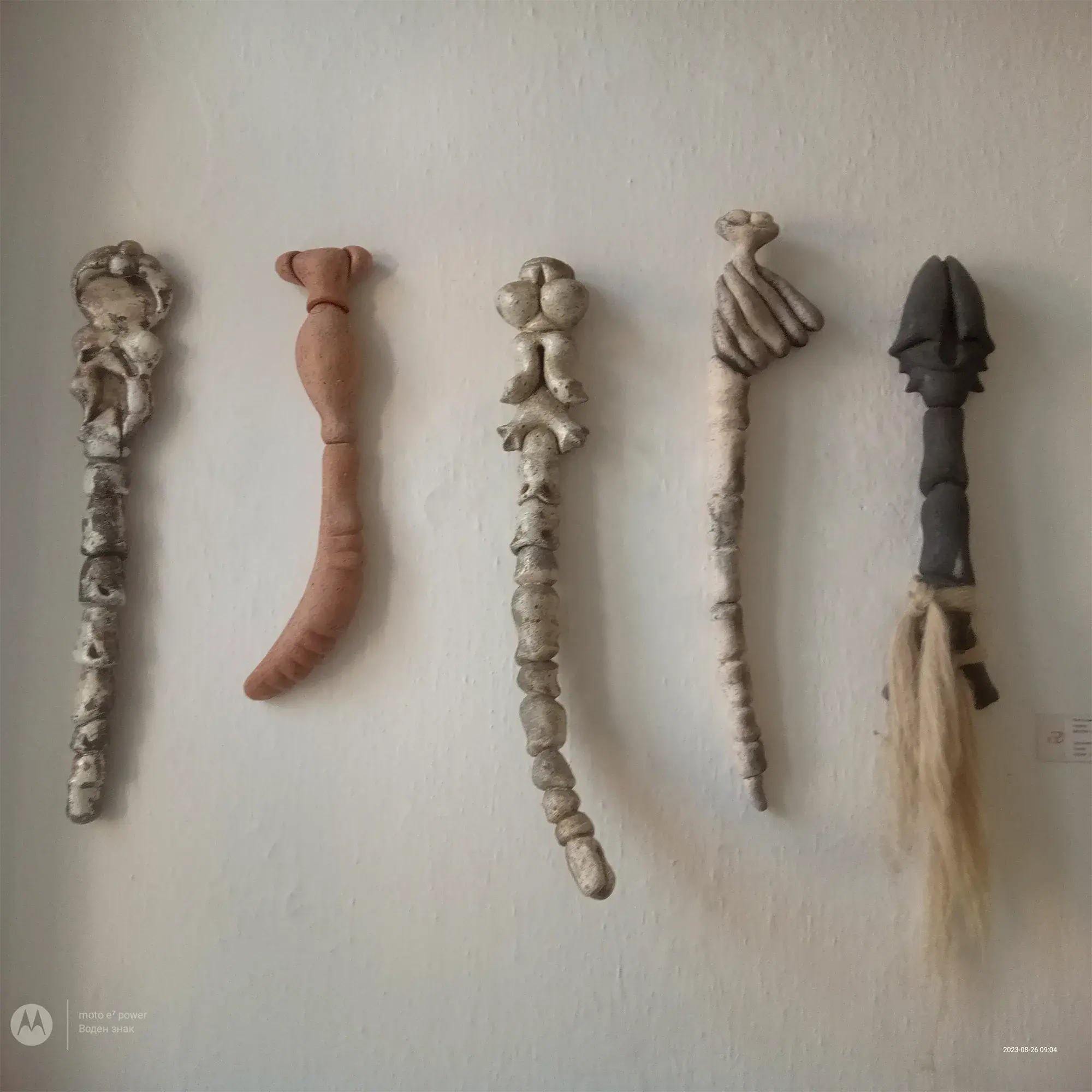
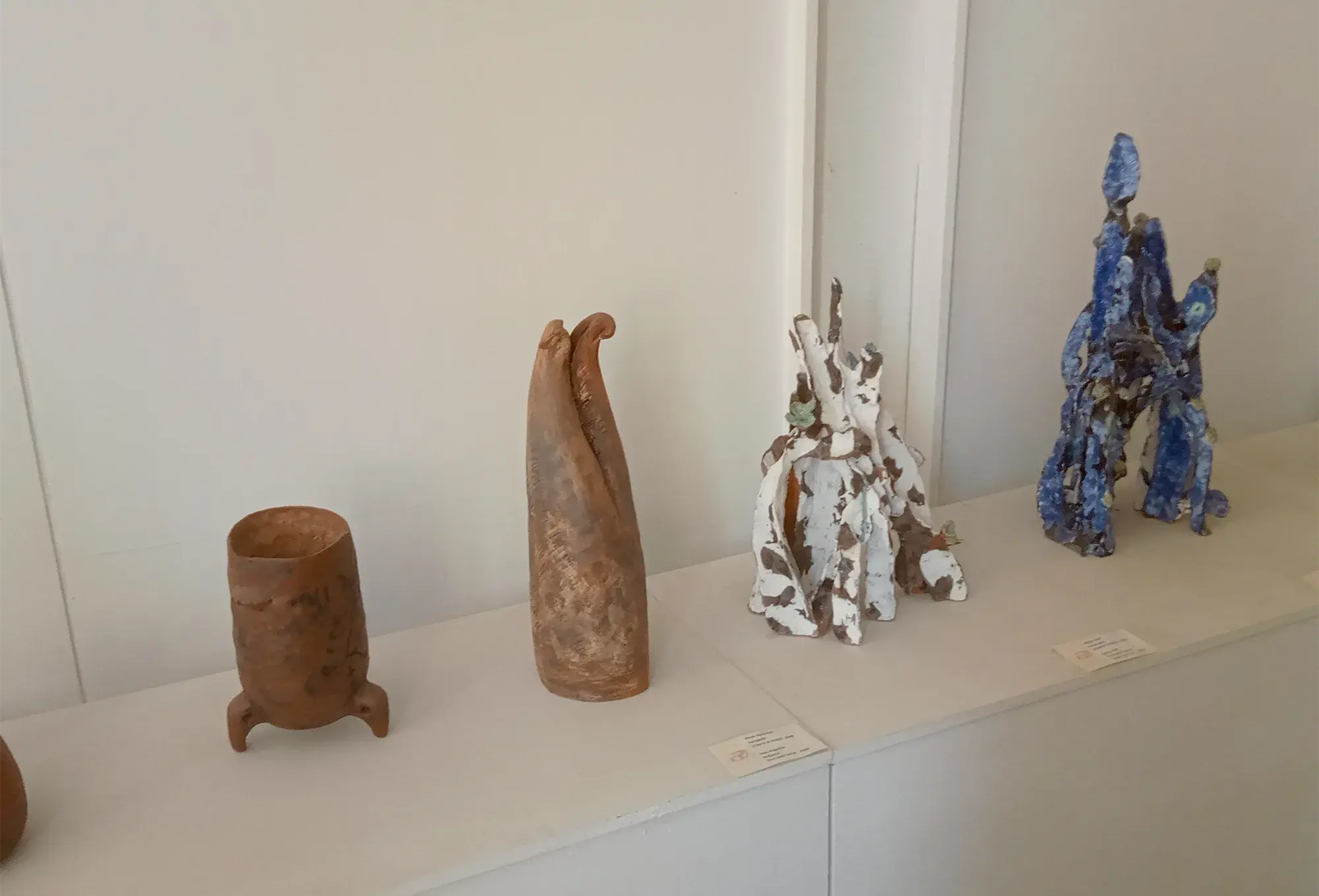
The Resen Ceramic Colony occupies a significant portion of the building. Since the 1970s, this colony has attracted ceramicists from around the world. The colony holds membership in the UNESCO International Academy of Ceramics. Artists come here for weeks at a time to work, teach, and experiment. The colony's international reputation has put Resen on the map for contemporary ceramic art, creating a strange but fitting parallel to Ahmed Niyazi Bey's original vision of making this mountain town matter to the wider world.
The Keraca Visulceva Gallery displays works by Macedonian and international artists. The collection rotates, so repeat visits offer different perspectives on Balkan and European art movements.
The building also houses Resen's library. Locals come to check out books in the same halls where Ottoman beys once planned the future of the region and where Serbian administrators later organized tax collection.
The mix of functions works. The Saraj isn't a museum piece frozen in time. It's an active cultural institution that happens to occupy a palace built from a postcard dream.
Why Prespa should be on your map
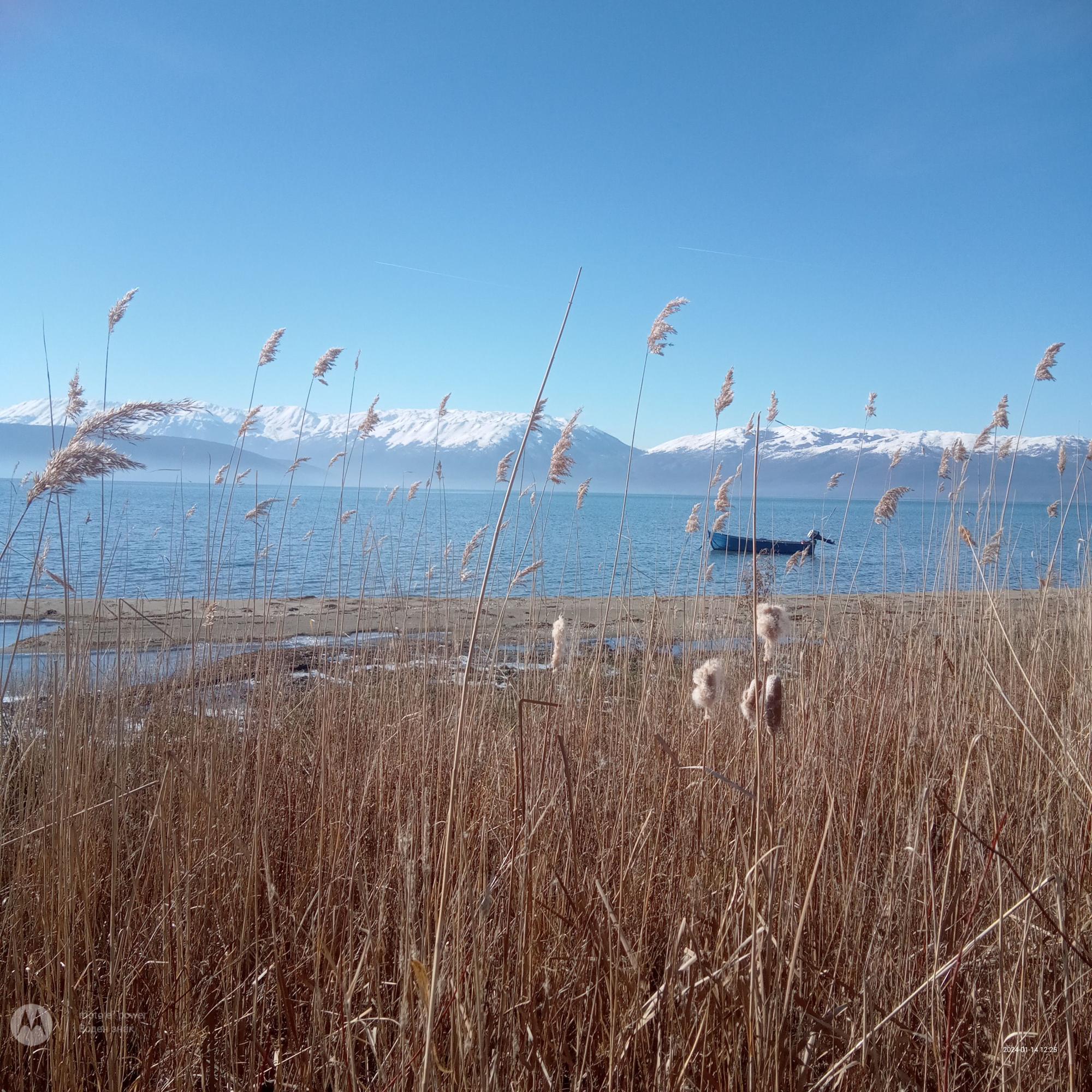
Resen sits at 880 meters above sea level in the Prespa basin. Lake Prespa stretches to the south and west, shared by North Macedonia, Albania, and Greece. The town is the only significant settlement in the Macedonian portion of the Prespa region.
Lake Prespa ranks among Europe's cleanest lakes. The water is clear enough that you can see several meters down from a boat. The lake hosts the only colony of Great White Pelicans in the European Union. These massive birds nest on Golem Grad, the island locals call Snake Island because of the dense population of reptiles living in the ruins of ancient settlements and medieval churches.
Golem Grad holds 12 Byzantine church ruins dating from the 10th to 14th centuries. The island served as a monastery complex, then a fortress, then a royal retreat. Archaeologists have documented Roman and Hellenistic remains beneath the medieval layers. You can visit by boat from Resen during summer months.
The wider Prespa region contains 130 documented archaeological sites. Settlements here date back to the Neolithic period. The region's strategic position between the Adriatic coast and the Aegean made it valuable to every power that passed through the Balkans.
Ninety-five churches and monastery complexes grace the hills around Lake Prespa. The Church of St. George in Kurbinovo, built in 1191, contains some of the finest examples of Byzantine fresco painting in the Balkans. The monastery at Slivnica maintains a spring that local tradition claims has healing properties.
The villages surrounding Resen preserve traditional architecture and ways of life. Brajcino, Ljubojno, and Dolno Dupeni feature stone houses with wooden balconies overlooking agricultural terraces. The Konjsko district contains buildings made from mud brick and stone, construction techniques that haven't changed significantly since prehistoric times.
Traditional Prespa cuisine centers on lake fish, mountain lamb, and dishes like gjomleze (cornmeal porridge with cheese), pitulici (fried dough), and the famous gravce-tavce (baked beans). Restaurants in Resen serve these dishes using recipes passed down through generations.
The geography puts you between two national parks. Galicica National Park rises to the east, separating Lake Prespa from Lake Ohrid. Pelister National Park climbs to the north, reaching 2,601 meters at Mount Pelister's peak. Both parks offer hiking trails, endemic species, and views that stretch across three countries.
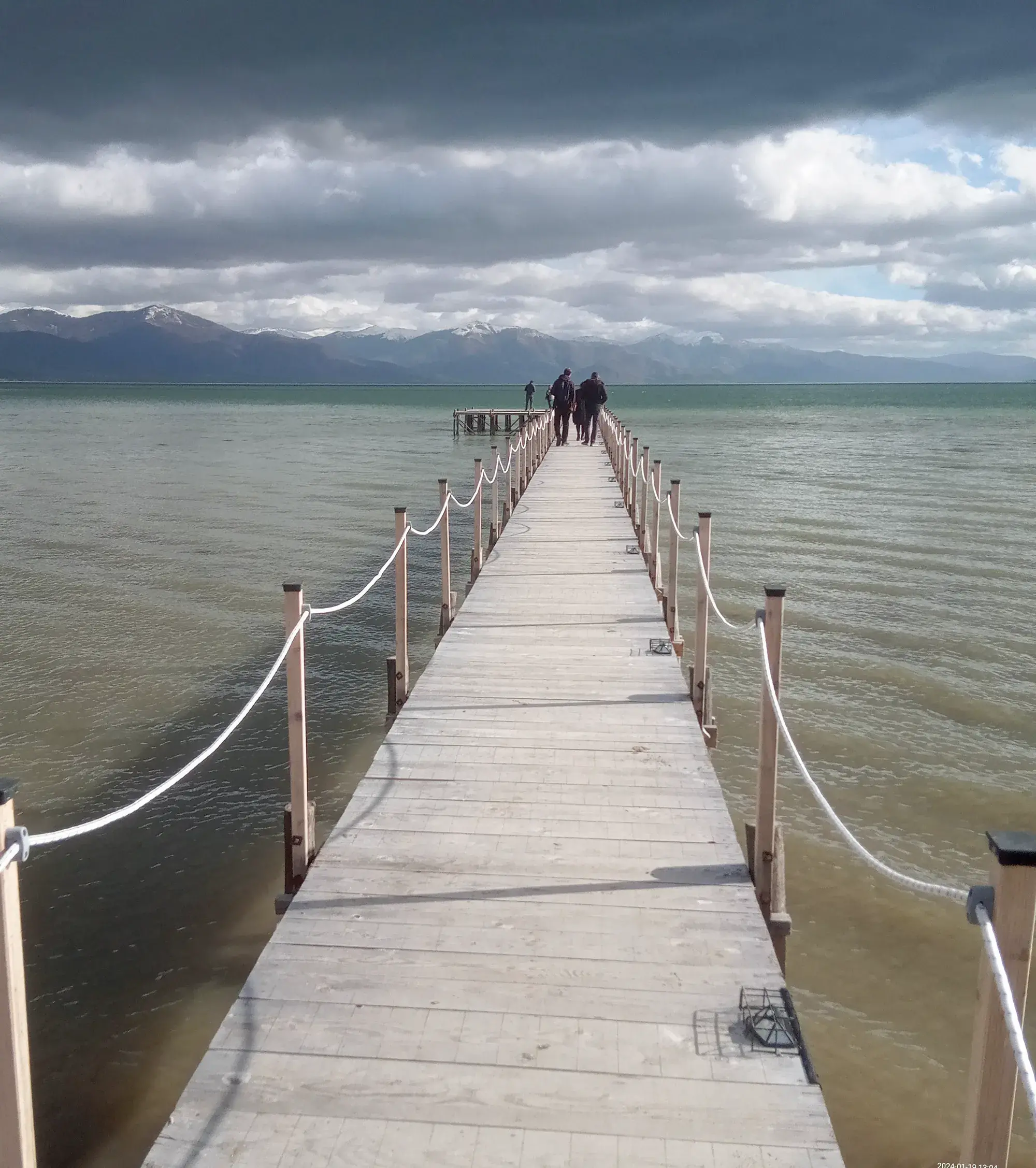
Lake Prespa has sandy beaches that fill with locals during summer. The water temperature reaches 20-24 degrees Celsius in July and August. Swimming, fishing, and kayaking are standard activities. The combination of lake access and mountain proximity within a 30-minute drive makes Prespa unusual. Most lake destinations in the Balkans don't offer serious mountain hiking without a long transfer.
How to Get to Prespa and Resen?
Resen sits 200 kilometers southwest of Skopje. The drive takes three to three and a half hours via Bitola. The roads are well-maintained. You'll climb through mountain passes and descend into the Prespa basin with Lake Prespa appearing suddenly as you round the final curves.
The Saraj stands in Resen's town center. You can't miss the 35-meter tower. Parking is available nearby. The building is open to visitors during standard business hours. Admission is minimal.
Spring and early summer offer the best weather for combining the Saraj visit with exploration of the lake and mountains. September and early October bring cooler temperatures and fewer crowds. Winter is quiet, and some rural tourism facilities close, but the Saraj and town remain accessible.
Several villages around Lake Prespa offer rural tourism accommodations. These aren't hotels. They're family-run guesthouses where you eat meals with your hosts and wake up to views of the lake or mountains. The owners can arrange boat trips to Golem Grad, guided hikes, or connections with local craftspeople who still practice traditional weaving and woodworking.
Plan at least two days in Prespa. One day for the Saraj, the town, and the lake. Another for either mountain hiking in Pelister or Galicica, or a more thorough exploration of the villages and churches. Three days lets you slow down and actually experience the place rather than checking boxes.
The Prespa region doesn't market itself aggressively. It doesn't need to. The people who find their way here tend to be the ones looking for something beyond the usual Balkan tourism circuit. They want the story behind the postcard. They want to stand in a palace built by a revolutionary who never saw it finished and understand what that says about ambition, about vision, about the distance between dream and reality.
You'll find that story in the Saraj. You'll find it in the lake that reflects three countries. You'll find it in churches older than most European nations. You'll find it in the pelicans nesting on an island of snakes and saints.
Prespa doesn't reveal itself quickly. That's why it's worth the drive.